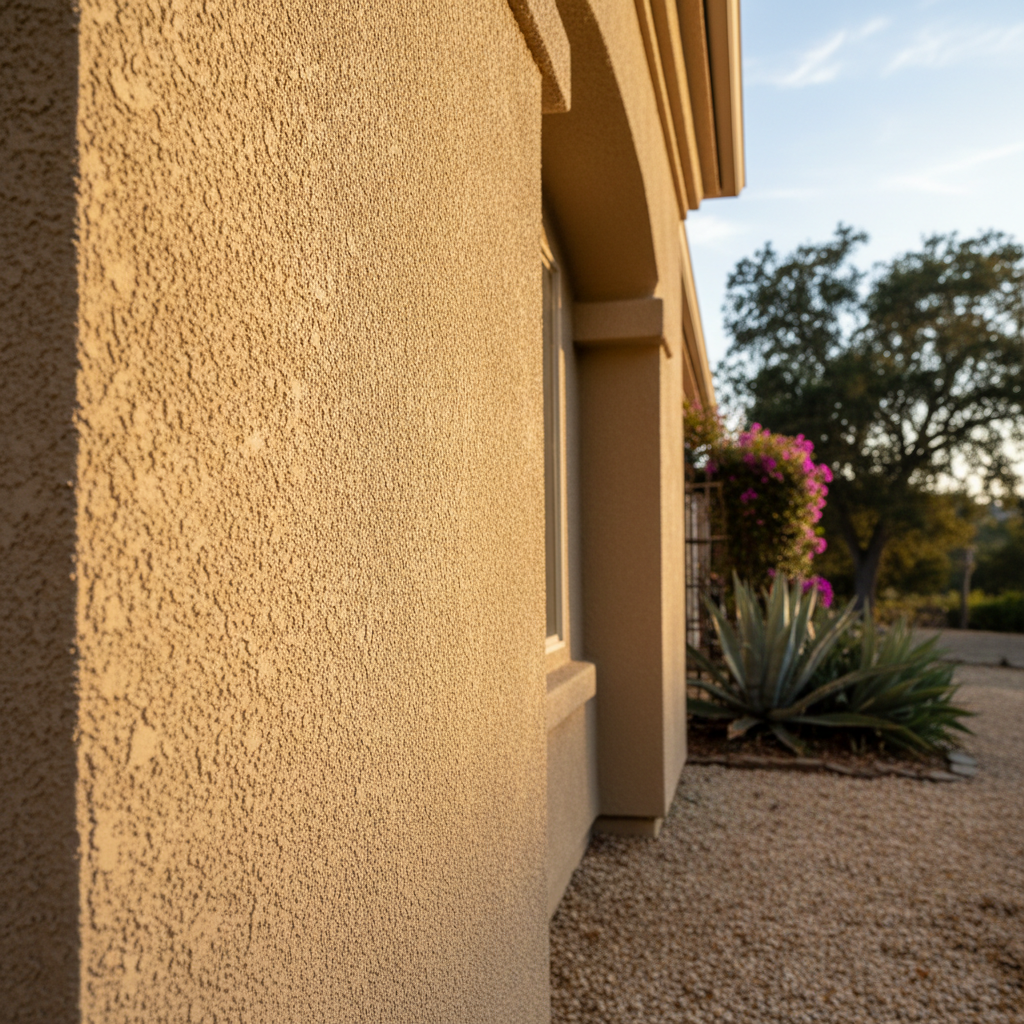
Can I use commercial-grade stucco on my Carmel Valley home?
This question pops up a lot, and it's a fair one. When people hear "commercial-grade," they often jump to "better" or "tougher." And, in some ways, they're not wrong. Commercial stucco systems are built for heavy use, bigger surfaces, and usually have stricter performance demands than what you'd find on a house. Just think about a shopping center or a large office building — those places need materials that can really take a beating and last for decades without much fuss.
For your home right here in Carmel Valley, especially with our coastal weather and those foggy mornings, using commercial-grade materials usually isn't necessary. Sometimes, it can even be too much, or it might cause problems if it's not put on just right. The main differences usually come down to how thick the base coats are, the kind of reinforcing mesh they use, and the specific finish coats. Commercial jobs might use thicker cement base coats or tougher synthetic systems made for extreme impact. Residential systems, though? They're perfectly good for homes, designed to hold up well, protect against the weather, and look great.
Now, if you're thinking about it for a specific reason — maybe a part of your house gets unusually heavy wear — then let's definitely talk. But for general home use, the standard residential systems are exactly what you want. They're proven, they don't break the bank, and they're designed for how a house naturally breathes and settles.
What's the difference between traditional stucco and EIFS on commercial buildings?
Okay, this is a big one, and it's super important to get your head around. Traditional stucco, sometimes called hard-coat stucco, is a cement-based product. We apply it in several layers over a lath (that's a metal mesh) and usually a weather-resistive barrier. It's stiff, it lasts, and it's been around for centuries. It breathes pretty well, which is great for managing moisture, especially in places like Carmel Valley where we get those damp starts to the day.
EIFS, which stands for Exterior Insulation and Finish Systems, is a synthetic setup. It begins with an insulation board — usually expanded polystyrene (EPS) — that's either screwed or glued onto the wall. On top of that, you get a base coat with a reinforcing mesh tucked into it, and then a finish coat. EIFS is fantastic for insulation; it really boosts energy efficiency compared to traditional stucco. Plus, it's more flexible, so it's less likely to crack from minor building shifts.
The biggest difference from a homeowner's point of view, besides the insulation, is how they deal with water. Traditional stucco relies on drainage planes and letting things breathe. EIFS, being a barrier system, absolutely has to be installed perfectly to keep water out. If water sneaks behind EIFS because of bad flashing or sealants, it can turn into a real headache since it doesn't dry out easily. That's why proper installation and detailing are critical for both, but especially for EIFS. We work with both here at Coastal Stucco, and I can tell you, the devil's truly in the details with EIFS.
How long does commercial stucco typically last compared to residential?
You'd probably expect commercial stucco to last way longer, right? Well, not necessarily. The actual lifespan mostly hinges on how well it was installed, the specific materials used, and how much ongoing care it gets — not just whether it's called "commercial" or "residential" grade. A traditional stucco system that's been put in correctly, whether it's on a home in The Preserve or a business downtown, can easily hold up for 50 to 100 years or even more with the right upkeep.
Where commercial applications might show a difference is in the initial specs for toughness. They might use thicker base coats or tougher synthetic finishes designed to handle more bumps or scrapes. This can help with longevity in spots that see a lot of traffic. But residential stucco, when installed right with good flashing, drainage, and quality materials, is incredibly durable too. It's not about one being inherently better in terms of how long it lasts. Instead, it's about the initial quality of the work and how well it's maintained over the years. Neglect either one, and you'll see problems pop up much sooner.
What kind of maintenance does commercial stucco require?
Maintaining commercial stucco isn't all that different from residential stucco, though the sheer size and how often you do it might change. The main things are regular cleaning, checking for cracks or damage, and making sure all the sealants and flashings are still doing their job.
- Cleaning: Commercial buildings often deal with more pollution, exhaust fumes, and just general grime. Regular power washing (use low pressure, please, to avoid damage) is key to keeping it looking good and stopping mildew, especially on those north-facing walls that stay damp longer.
- Inspections: You really need to check routinely for tiny hairline cracks, spalling, or any signs of water getting in around windows, doors, and rooflines. These small issues can quickly become big problems if you ignore them.
- Sealants & Flashing: This is huge. The sealants around any openings and the flashing details are your first line of defense against water. They wear out over time from UV rays and weather. Re-caulking and making sure flashing is working as it should is absolutely critical.
- Repairs: Any damage needs to be fixed fast. Small cracks can let water in, which leads to bigger issues like rot or mold behind the stucco.
It's all about being proactive, you know? Don't wait until you spot a huge stain or a chunk missing. Sticking to a regular maintenance schedule will save you a ton of money and headaches down the road.
Are there specific stucco colors or textures better suited for commercial applications?
When it comes to commercial stucco, you'll often see a wider array of colors and textures, but that's usually driven more by a company's brand or the building's design than by what's inherently "better." For instance, a restaurant might pick a really specific, bold color to grab attention, while a professional office building might stick to more subdued, classic shades.
Texture-wise, commercial buildings often go for more uniform, smoother finishes like a sand finish or a light dash. These tend to be easier to clean over large areas and give off a clean, modern vibe. However, you'll still see heavier textures, especially on buildings designed to look like older architecture. For your home, though, you have total freedom. Maybe you'd like a Santa Barbara smooth finish, which is pretty iconic in our area, or perhaps a more rustic dash or worm finish.
The main thing is that the color and texture don't really affect how the stucco performs. It's all about the look you're trying to achieve. Just remember, darker colors can soak up more heat, which might be something to think about for energy efficiency in some climates. But here in Carmel Valley, that's less of a worry than, say, in Palm Springs.
What are the common causes of stucco failure on commercial buildings?
The reasons stucco fails on commercial buildings are pretty much the same as on homes, just often on a bigger scale. It almost always boils down to one simple thing: water.
- Poor Installation: This is number one, no doubt. If the stucco wasn't put on correctly from the get-go — think inadequate weather barriers, lath not attached right, not thick enough, or bad mix ratios — it's going to fail.
- Flashing and Sealant Issues: Windows, doors, rooflines, and any other openings are major weak spots. If flashing isn't installed properly or if sealants break down and aren't kept up, water will get behind the stucco.
- Lack of Drainage: Stucco systems, especially the traditional kind, need to be able to drain and dry out. If water gets stuck, it leads to rot, mold, and the stucco peeling away.
- Building Movement: All buildings settle and shift a little. If control joints aren't placed correctly or if the stucco isn't flexible enough for the movement, you'll definitely see cracks.
- Impact Damage: Commercial buildings, particularly at ground level, are more likely to get hit by vehicles, equipment, or even just heavy foot traffic. This can create cracks and openings for water to sneak in.
- Poor Maintenance: Ignoring little cracks, mildew growing, or failing sealants lets small problems balloon into major structural headaches.
It's a chain reaction, really. A tiny crack lets in a bit of water, that water doesn't dry, it causes rot in the sheathing, and pretty soon you're looking at a huge repair bill. That's why I always tell people to get any issues checked out early.
Is it harder to repair commercial stucco than residential stucco?
Not necessarily harder, but it can be more complicated because of the sheer size and how tough it is to get to certain spots. The actual repair methods for commercial stucco are mostly the same as for residential. You're still cutting out damaged sections, putting in new lath, base coats, and finish coats to match the existing texture and color.
Where it gets tricky on commercial jobs is often the logistics. You might be dealing with multi-story buildings, which means needing scaffolding or lifts, and that adds to the cost and complexity. Matching existing textures and colors over a large, possibly sun-faded commercial facade can also be tougher to make look seamless. Plus, commercial buildings often have more intricate architectural details, signage, or utility penetrations that require really careful work.
For your home here in Carmel Valley, most stucco repairs are pretty straightforward for a crew that knows what they're doing. We're used to matching the unique textures and colors you find on homes, from the newer developments to the older, more established properties. It's all about finding a contractor who truly knows their stuff and takes pride in their work to make sure that repair blends in perfectly.